Boğaziçi University, the Bosporus Campus Where Academics Have Turned Their Backs on Erdoğan Every Weekday Since 2021
On 13 February 2026 Recep Tayyip Erdoğan came to Boğaziçi University to open a dormitory. To receive him, the university shut its own campus. Classes went online. Students living in the dormitories were told to leave their rooms in the morning for security screening, and only event staff and residents of the women's dorm were let in. Police detained at least three people near a gate when students tried to hold up banners. The academics who have stood outside the rector's building every weekday since January 2021 couldn't get in to do it.
That is where Turkey's best-known university has ended up after five years of rectors chosen by the president.
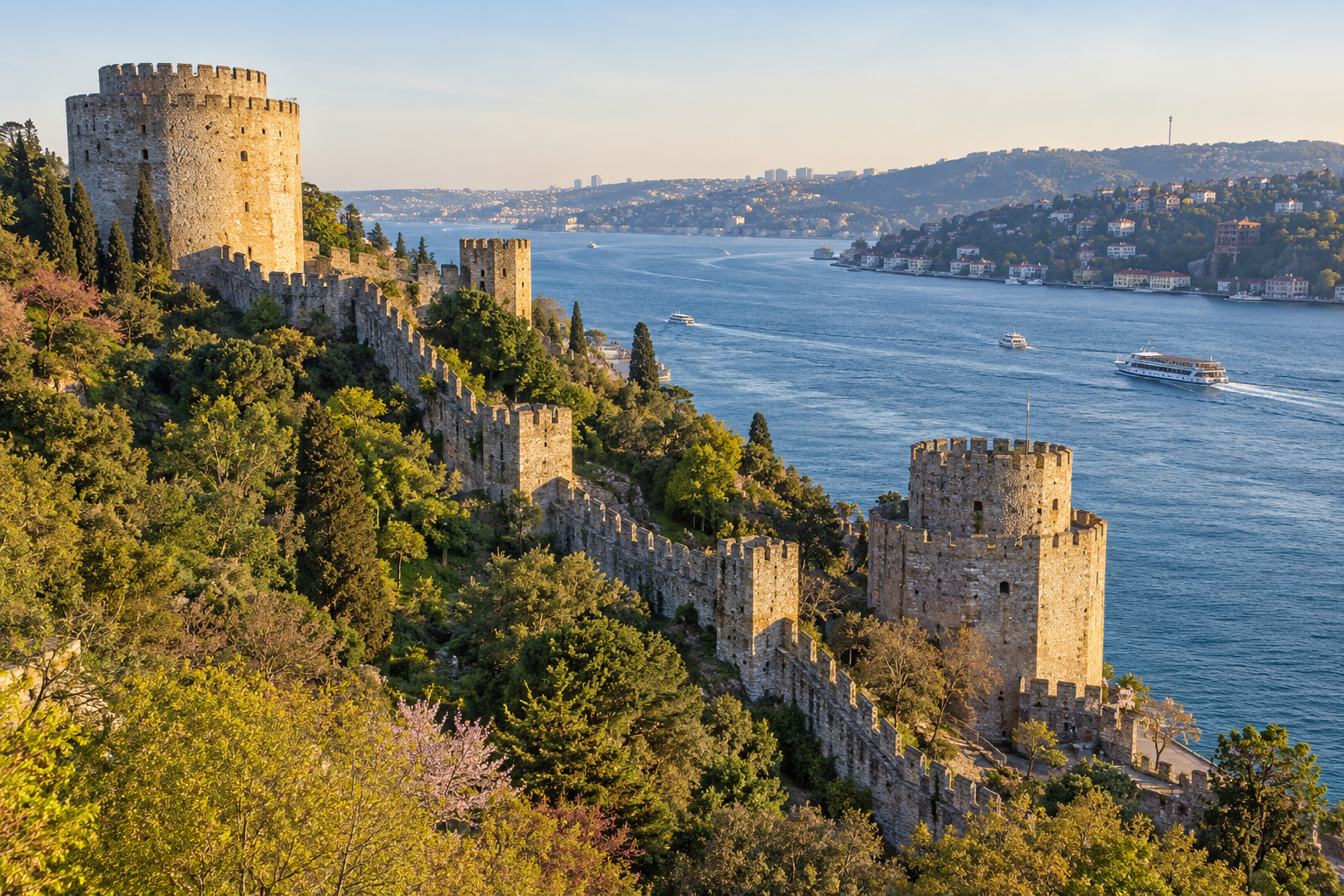
Image: pxef.com
A college on the strait
The campus sits on the hill above Bebek and Rumeli Hisarı, with one of the best views on the Bosporus (the fortresses). It began as Robert College, founded in 1863 by the American missionary Cyrus Hamlin and the merchant Christopher Robert, which still claims to be the oldest American school operating outside the United States. In 1971 its university side passed to the Turkish state and became Boğaziçi University, the Turkish name for the Bosporus. Teaching stayed in English, standards stayed high, and its graduates run a fair part of Turkish business, science and public life. It also kept a habit of electing its own rectors and arguing back.
The appointments
On 1 January 2021 Erdoğan appointed Melih Bulu, a former parliamentary candidate for his own AKP from outside the university, as rector by decree. Students and staff protested. Police answered with pepper gas and plastic bullets. On 1 February they stormed the south campus. By early February the Boğaziçi Solidarity platform counted at least 560 students detained. Students were jailed over an artwork showing the Kaaba with LGBT flags, and the interior minister, Süleyman Soylu, called them "LGBT deviants" on Twitter. Seven of them were later acquitted.
Bulu was removed in July 2021. On 20 August Erdoğan appointed his deputy, Naci İnci, a candidate opposed by 95 percent of the academics in a university vote. İnci removed three deans in January 2022 and made himself acting dean of arts and sciences. He dismissed lecturers, among them the filmmaker Can Candan, and later barred 16 academics from teaching for taking part in the protests. Through all of it the faculty kept up their silent vigil, standing with their backs to the rectorate.
The law behind it
What Erdoğan did at Boğaziçi he can do at every state university. Since 2016, after the coup attempt, the president has appointed rectors directly, with no election. Turkey's Constitutional Court found that power unconstitutional, with effect from June 2025. Parliament restored it in an omnibus law on 1 July 2025, and dropped the eligibility requirements for the post at the same time.
The campus has stayed tense. In May 2025 police detained 97 people after students protested a talk on campus by the preacher Nureddin Yıldız, who had argued that Islamic law sets no minimum age of marriage. Six students were jailed pending trial. After the arrest of Istanbul's mayor, Ekrem İmamoğlu, in March 2025, students across the city faced the same treatment (his arrest).
Why it matters
Boğaziçi is not the only university Erdoğan has brought to heel, but it is the one that mattered most to the secular, Western-facing Istanbul that has voted against him again and again. Breaking it was the point. The academics outside the rectorate know they won't win this year. They keep standing there anyway.